Taking Action

CSURA has been instrumental in affecting change in Colorado Springs by using the available powers and tools provided through the state statute. This section highlights ways to sustain and improve how CSURA evaluates project proposals, guidance for a proactive approach to urban renewal, and outlines recommended programs to further CSURA’s goals and impact throughout the city and outside of plan areas.

Project Criteria

The Strategic Plan’s Mission, Philosophy, Values, and Goals should be considered when evaluating potential projects, programs, and other investments. When a project meets the minimum criteria for blight, then the Strategic Plan should be utilized to further evaluate opportunities and identify ways in which proposals can potentially be strengthened.

While it is unlikely that any one project or program will make significant strides toward achieving every value and goal, those that address multiple values and goals should certainly be given higher consideration. The review of values and goals can also be helpful in identifying how a project or program can be adjusted or augmented to create even greater benefit to the Colorado Springs community.

Throughout the Strategic Planning process, additional evaluation criteria were identified. In some cases, the evaluation criteria help to operationalize values and goals and in other cases, the evaluation criteria define additional community benefits that are of interest to the CSURA Board, its partners, and the broader community. Again, no project or program is expected to meet all evaluation criteria. Rather, the evaluation criteria—along with the mission, philosophy, values, and goals—should help to communicate desires and expectations to potential applicants and facilitate a conversation about how a project or program with CSURA involvement can best serve and enhance the community.

Additional project evaluation criteria:

It should be noted that the CSURA Board may choose to remove or add evaluation criteria based on changing community needs or the unique needs and desires of a particular geography and/or demographic within Colorado Springs.

Programs

The fiscal structure and available funds enable CSURA to broaden its impact on Colorado Springs. Through the course of the Strategic Planning process, a number of program concepts emerged. The following summarizes four high-level program concepts by providing an overview, intent, key considerations, and potential partnerships. Upon adoption of the Strategic Plan, the program concepts should be fleshed out and vetted in greater detail to determine if, when, and how they should be implemented.

Acquisition and Remediation of Blighted Properties

1.

Overview:
A fund to proactively take the lead in positioning blighted properties for redevelopment; CSURA would identify, acquire, clear, and market distressed and blighted properties for redevelopment. Monies from the fund could be used to:

a. Purchase property;
b. Demolish structures;
c. Provide loans or grants to property owners;
d. Establish public-private partnerships for redevelopment; and
e. Form URAs and establish TIF revenue stream.

2.

Intent:
 Exercise the ability for CSURA to purchase, assemble, and demolish a property, RFP/RFQ for redevelopment, and/or sell property to developer to meet community and neighborhood needs, including better housing, services, amenities, and other community benefits.

3.

Key Considerations:
Deteriorated and poorly maintained structures can sometimes still provide necessary housing for residents or a place of business for a viable or even thriving business entity. Relocation and displacement should be key considerations when identifying potential properties to acquire and clear for redevelopment.

4.

Potential Partnerships:
City of Colorado Springs Code Enforcement, Neighborhood Associations, Developers.

Stabilization Revolving Loan Fund and/or Grants

1.

Overview:
A new funding program that helps to stabilize neighborhoods through improving the quality of existing housing stock and preserving the supply of naturally occurring affordable housing. Neighborhood stabilization may also be achieved through tax assistance, down payment assistance, technical assistance for estate planning, etc.

2.

Intent:
To provide homeowner assistance for rehabilitation, elements that extend lifecycle (i.e., foundation repair, roofs), preservation of affordability, as well as small business owner assistance for façade improvements, historic preservation, building expansion, signage, etc.

3.

Key Considerations:
Neighborhood stabilization programs can make significant strides in retaining existing housing stock and deterring significant redevelopment within existing neighborhoods. Such a program can also help individuals, families, and other households stay in place, but it should be noted that voluntary displacement (i.e., homeowners choosing to sell their improved properties) is a common occurrence and can contribute to a degree of gentrification.

4.

Potential Partnerships:
DDA, Business Improvement Districts (BIDs), Neighborhood Associations, homeowners, business owners, and landlords.

Design Workshop

1.

Overview:
Establish a membership organization focused on supporting and promoting high quality architecture, landscape architecture, and urban design.

2.

Intent:
Provide a range of programming to advance and promote high quality design and design thinking in Colorado Springs, including:


a. Educational opportunities for members and the broader community
including guest speakers, panels, and training;
b. Networking opportunities for design professionals and others who care
about design;
c. Awards recognizing high quality and innovative projects; and
d. Organized tours of development projects.
e. Technical assistance for smaller or less experienced developers and
property owners;
f. Design competitions that invite designers to propose innovative
solutions for a specific site or development typology;
g. Assemble a design resource library that serves as a repository of design
standards and guidelines, best practices, and inspirational precedents;
and
h. Advocacy for innovative design, design standards and guidelines, etc.


3.

Key Considerations:
The staffing model for a Design Workshop should be carefully considered. CSURA staff is already extended to capacity, so a Design Workshop will likely require a new part-time or full-time staff and a robust volunteer program. In addition, the term Design Workshop implies a physical presence and location, but it is very possible for such a program to be primarily virtual and borrow space from partner groups and organizations for events and other in-person needs.

4.

Potential Partnerships:
Professional Organizations (AIA, ALSA, APA, ULI, etc.), City of Colorado Springs, local colleges and universities.

Funding To Support Partner Organizations

1.

Overview:
A fund to support partner organizations, programs, and events throughout the year that align with the Mission, Philosophy, Values and Goals of CSURA.

2.

Intent:
Offer donations and sponsorships for community events and programs that align with the CSURA Strategic Plan, promote goodwill with the community, and extend the reach of the organization without the need for additional staff or board resources.

3.

Key Considerations:
Requests for sponsorships and donations are sometimes made with long lead times but frequently come just weeks or months before a program or event. Evaluating individual requests can be challenging without knowing what other asks will be coming the rest of the year.

4.

Potential Partnerships:
ULI events, non-profit partners, annual City of Colorado Springs events.

Future URA Opportunities

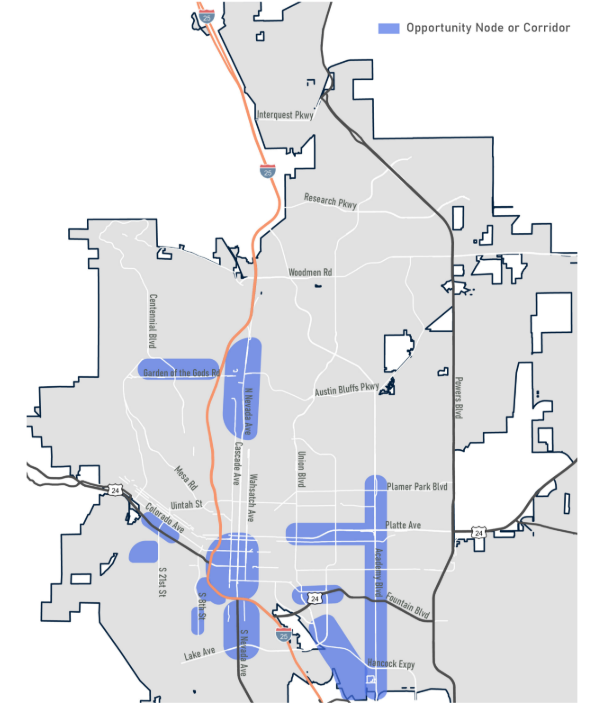
The Authority is open for business and continues to receive proposals from developers for new urban renewal areas and projects. CSURA is largely reactive to these proposals and selects projects to recommend to the CSURA Board. CSURA is well positioned to expand its impact with a proactive approach to urban renewal that can be paired with the existing application process. Future opportunities for URA activities are identified based on a series of typologies and a map of nodes and corridors. The typology descriptions and map convey to potential partners and interested stakeholders the type of corridors, nodes, and properties CSURA would like to support. This exercise is intended to be high-level and showcase how CSURA can provide benefit throughout the city, not only in downtown. It is important to note that CSURA will continue to accept proposals and work in areas of the city outside of the parameters described in this section.

Opportunity Typologies

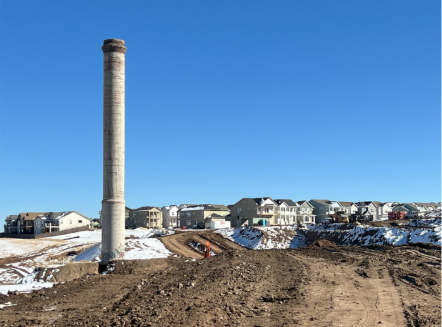
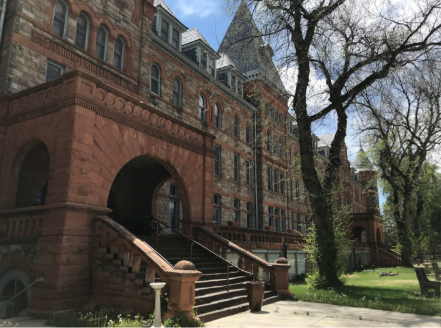
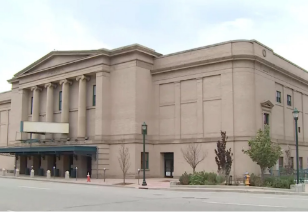
The opportunity typologies listed below identify the property types CSURA believes can benefit from urban renewal. This is not an exhaustive list and is intended to be updated as necessary to promote the property typologies aligned with CSURA’s Mission, Philosophy, and Values.

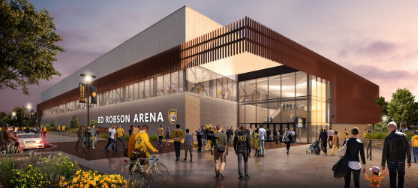
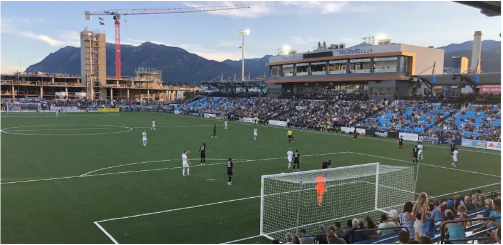
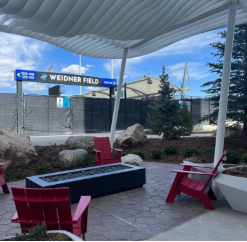
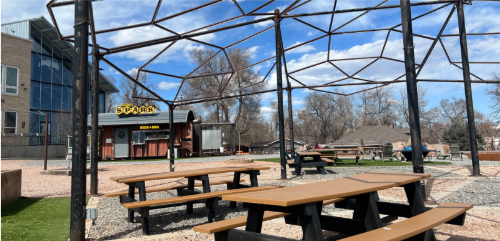
Opportunity Typologies Examples

Opportunity Map

The opportunity map is a high-level look at the city to identify corridors, nodes, and areas that can benefit from CSURA support and attract new investment. This map is tied to the PlanCOS Vision Map in the City’s Comprehensive Plan that identifies redeveloping and developing activity centers, reinvestment areas and community hubs, and changing neighborhoods. There are opportunities for infill and redevelopment of commercial properties as well as rehabilitation and preservation of residential properties throughout the city.